

The Creality K2 Plus is the best 3D printer for cosplay in South Africa for full-size helmets and armour, because its 350 x 350 x 350 mm build volume fits most adult helmets in one piece and its actively heated chamber prints heat-resistant ASA and ABS without warping. The Bambu Lab H2S offers a similar large-format chamber with faster print speeds. For segmented helmet files and smaller props, the Bambu Lab P1S Combo is the most reliable all-rounder, while the Creality Ender-3 V3 SE gives beginners an affordable entry point. 3D Printing Store stocks all five machines covered here, with walk-in branches in Centurion and Boksburg.
Key Takeaways
- One-piece helmets: the Creality K2 Plus (350 mm cube) and Bambu Lab H2S (340 x 320 x 340 mm) print most adult helmets without splitting the model.
- Fast segmented prints: the Bambu Lab P1S Combo pairs a 256 mm cube with an enclosed frame and a four-spool AMS for reliable multi-part builds.
- Entry level: the Creality Ender-3 V3 SE (220 x 220 x 250 mm) suits badges, gauntlet panels, and hand props.
- Filament choice: PLA+ for indoor display pieces, ASA or ABS in an enclosed chamber for props that face summer heat, and TPU for straps and flexible trims.
- FDM over resin: filament printers produce lighter, tougher wearable armour; resin belongs on small gems and fine detail parts.
| Printer | Build Volume | Chamber | Multi-Colour | Best Cosplay Use |
|---|---|---|---|---|
| Creality K2 Plus Combo | 350 x 350 x 350 mm | Actively heated, up to 60°C | CFS included, 4 spools (expands to 16) | One-piece helmets, chest plates |
| Bambu Lab H2S Combo | 340 x 320 x 340 mm | Actively heated, up to 65°C | AMS 2 Pro included, 4 spools with drying | Large ASA and ABS armour, multi-colour trims |
| Bambu Lab P1S Combo | 256 x 256 x 256 mm | Enclosed, unheated | AMS included, 4 spools (expands to 16) | Segmented helmets, blasters, gauntlets |
| Creality K2 Plus | 350 x 350 x 350 mm | Actively heated, up to 60°C | CFS compatible, sold separately | Large single-colour armour |
| Creality Ender-3 V3 SE | 220 x 220 x 250 mm | Open frame | Single colour | Small props, badges, accessories |
What Makes a 3D Printer for Cosplay Different From a General Desktop Printer?
Cosplay builds push a machine harder than keyrings and phone stands ever will. A single helmet shell can run for 20 to 40 hours, use most of a 1 kg spool, and occupy the entire build plate. Small defects that nobody notices on a figurine become obvious once a part is sanded, primed, and painted gloss black. Desktop 3D printing handles all of this well, provided the hardware matches the job.
Key Features to Check in a 3D Printer for Cosplay
- Build volume: 300 mm or more on every axis prints most helmets whole; 256 mm means splitting into two to four parts.
- Enclosure and chamber heat: an enclosed, heated chamber stops large ASA and ABS panels from lifting at the corners.
- Material range: a direct-drive extruder handles PLA+, PETG, ASA, ABS, and flexible TPU.
- Multi-colour system: a CFS or AMS unit prints contrasting visor trims and logos without hand painting.
- Failure detection: cameras and runout sensors catch problems before a 30-hour print turns to scrap.
Build Volume: Will a Full Helmet Fit on Your 3D Printer for Cosplay?
A typical adult helmet measures roughly 250 to 290 mm wide and 280 to 330 mm tall. That single fact decides most purchases. A 350 mm cube swallows the whole shell. A 256 mm cube does not, so the model gets cut into sections and glued.
Maximum build height vs a typical adult helmet (mm)
Orange bar shows the upper end of a typical adult helmet height. Bars below it require splitting the model.
Splitting is not a disaster. Many popular helmet files ship pre-cut with alignment keys. The trade-off is time: every seam needs gluing, filler, and sanding before primer. On a Mandalorian-style helmet split into four parts, the seam work alone can add a full weekend.
Orientation matters too. Printing a helmet crown-up reduces supports inside the dome, while printing it face-down keeps layer lines off the visor area. A larger bed gives more freedom to choose the orientation that suits the finish, not the one that merely fits.
Best Filament for a 3D Printer for Cosplay in South African Heat
Material choice matters as much as the machine. The wrong 3D printing filament turns a perfect helmet into a warped one before it reaches the convention floor.
- PLA+: easy to print, low warping, and sands cleanly. It softens at around 55 to 60°C, so it suits pieces stored and worn indoors.
- PETG: tougher than PLA and more heat tolerant, though it sands less cleanly and strings more.
- ASA and ABS: the choice for props that ride in cars and stand in the sun. Both need an enclosed chamber to stop large panels warping. ASA adds UV resistance for outdoor shoots.
- TPU: flexible filament for straps, gaskets, ear pieces, and armour edging that must bend without cracking.
Comic Con Africa at the Johannesburg Expo Centre in Nasrec falls in late September, when Highveld days are already warming up. A PLA helmet left on the back seat of a car parked in the sun near Gold Reef City can sag along the brow within an afternoon. ASA or ABS printed in a heated chamber shrugs that heat off. For anything worn outdoors or transported often, 3D Printing Store recommends ASA as the default.
Best 3D Printers for Cosplay Available at 3D Printing Store
Each 3D printer for cosplay below is stocked locally and covered by local warranty support. The list runs from the largest one-piece helmet printer down to the best entry-level option.
Creality K2 Plus 3D Printer with CFS Combo
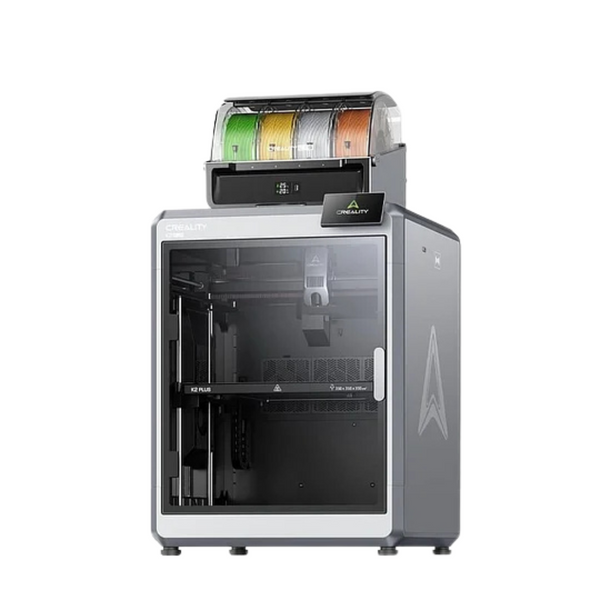
The top pick for full-scale armour. A 350 x 350 x 350 mm build volume prints most adult helmets in one piece, and the actively heated chamber keeps ASA and ABS panels flat. The included Creality Filament System loads four spools for multi-colour trims and expands to 16 colours. Strain gauge levelling and dual cameras keep long prints on track.
View Product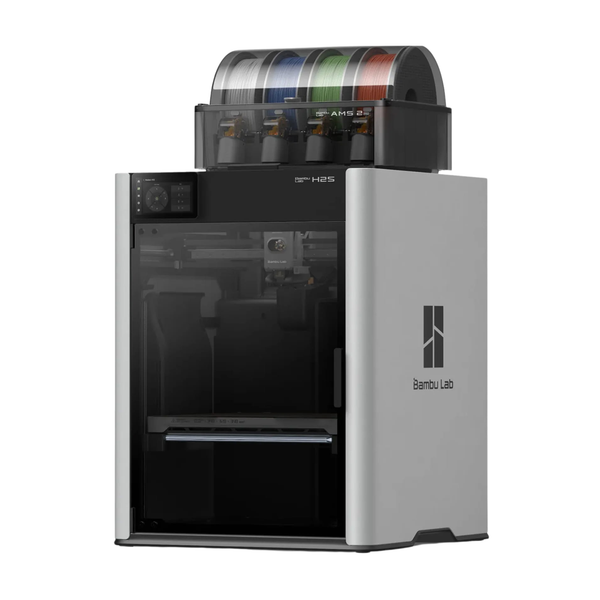
Bambu Lab H2S 3D Printer Combo with AMS 2 Pro
Bambu Lab's largest build chamber at 340 x 320 x 340 mm, actively heated to 65°C, with a 350°C hotend and 1000 mm/s toolhead speed. The bundled AMS 2 Pro dries filament as it feeds and reads RFID spools automatically. Built for makers printing big ASA armour with contrasting colour detail in a single setup.
View Product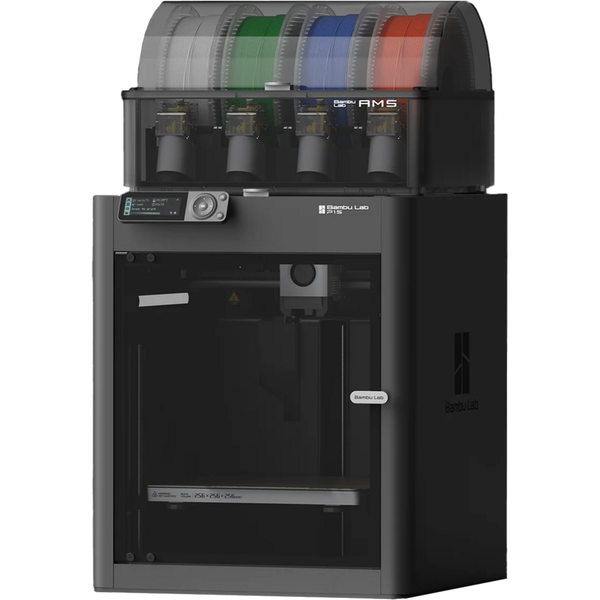
Bambu Lab P1S 3D Printer Combo with AMS
The dependable workhorse for segmented helmet files, blasters, and gauntlets. A 256 x 256 x 256 mm build volume, enclosed steel and polycarbonate frame, and 500 mm/s CoreXY motion keep multi-part builds moving. The airtight four-spool AMS handles PLA, PETG, ABS, and ASA, and power-loss recovery protects overnight prints.
View Product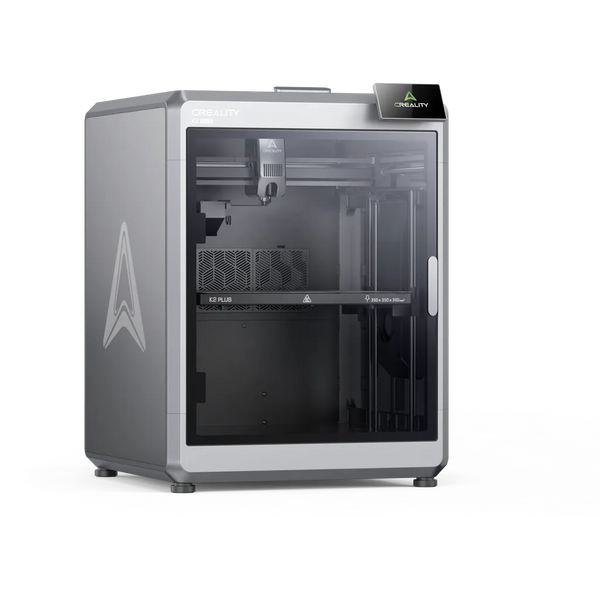
Creality K2 Plus 3D Printer
The same 350 mm cube and heated chamber as the combo, without the CFS unit. A sensible choice for builders who paint every piece by hand and print mostly in one colour. The CFS can be added later when multi-colour trims become part of the workflow.
View Product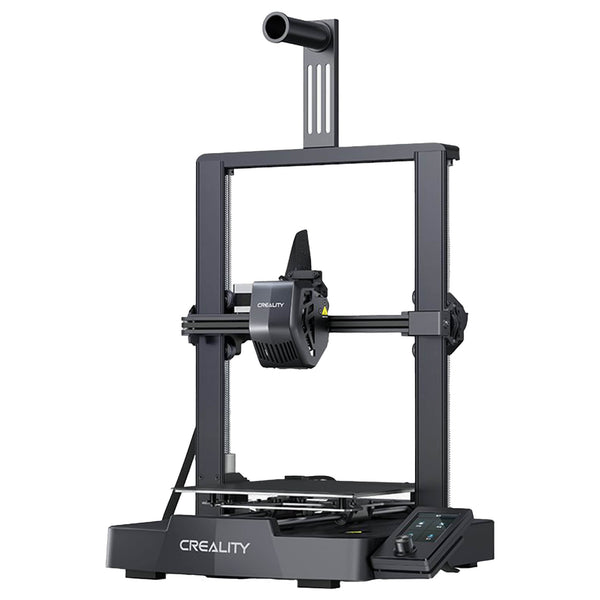
Creality Ender-3 V3 SE 3D Printer
An approachable first machine for badges, hand props, and armour accents. The 220 x 220 x 250 mm bed, CR Touch auto levelling, and Sprite direct-drive extruder print PLA, PETG, and TPU reliably at up to 250 mm/s. Large helmets need splitting, but it teaches every core skill a cosplay maker needs.
View ProductResin or FDM: Which Type of 3D Printer for Cosplay Suits Props?
Resin printers produce astonishing surface detail. That detail comes at a cost for wearable pieces. Large resin parts are heavy, brittle, and expensive in material, and a resin helmet that hits a tiled floor at a convention tends to shatter rather than scuff.
FDM filament printers remain the standard for armour, helmets, and anything strapped to a body. The parts flex slightly under impact, weigh less at the same wall thickness, and accept filler, primer, and paint easily.
Resin earns its place on small, decorative components:
- Gems and inset jewels for crowns and sword pommels
- Mechanical greeblies on blasters and jetpacks
- Rings, badges, and insignia with fine raised lettering
- Small faces and figures mounted on staffs or shields
Plenty of experienced builders run both: an FDM machine for the structure and a compact resin printer for the jewellery. Start with FDM, then add resin once the detail work demands it.
Fixing Common Print Problems on Large Cosplay Parts
Big prints magnify small calibration errors on any 3D printer for cosplay. These are the five faults most cosplay builders hit on helmet and armour files, with a dedicated guide for each.
- Tangled filament on tall shells: a helmet that pops off the bed at hour 18 leaves a bird's nest behind. The guide on how to fix spaghetti prints covers adhesion, supports, and detection.
- Jobs that halt halfway: runout, clogs, and power interruptions all end long prints early. Read why a 3D print stops mid-print before starting a 30-hour helmet.
- Horizontal ridges after priming: gloss paint exaggerates every ridge. The article on Z-banding causes and fixes explains the mechanical culprits.
- Drooping brows and visor overhangs: overhangs above 45 degrees sag without enough airflow. Dial in cooling fan settings for better 3D prints, and lower fan speed for ASA and ABS.
- Bulging bases that stop halves mating: a flared first layer leaves a lip on every split seam. Learn how to fix elephant's foot on the first layer so sections glue flush.
Finishing, Scanning, and Support for Cosplay Builders
A printed helmet straight off the plate is roughly 60 percent of the job. The rest happens on the workbench. Most builders follow the same sequence: remove supports, sand from 120 to 400 grit, apply filler primer, sand again, then paint and weather.
Fit is the other half. 3D scanners capture a head, forearm, or torso so armour can be scaled to the wearer before printing, which saves reprinting a helmet that sits two centimetres too low. Spare nozzles and other 3D printer parts keep a machine running through convention season, and a hardened nozzle is worth fitting before printing any carbon-fibre filament.
New makers often benefit from 3D printer training before tackling a 30-hour print on a new 3D printer for cosplay. Slicer settings, wall counts, and support placement make a bigger difference to helmet strength than raw printer speed. 3D Printing Store stocks 3D printer filament, scanners, and replacement components alongside every printer in this guide, so a single visit covers the full build.
Which 3D Printer for Cosplay Should You Buy?
Match the 3D printer for cosplay to the largest piece you plan to wear. That rule settles most decisions in under a minute.
- Full helmets and chest plates in one piece: the Creality K2 Plus Combo, or the Bambu Lab H2S Combo for faster large-format printing and filament drying.
- Segmented helmets, props, and fast turnaround: the Bambu Lab P1S Combo.
- Large single-colour armour on a tighter spend: the standalone Creality K2 Plus.
- First printer for small props and accessories: the Creality Ender-3 V3 SE.
Builders comparing brands can browse the full range of 3D printers for sale, or narrow the search to the Creality 3D printer range, which includes the K2 Plus and Ender lines from Creality. Staff at both branches can talk through build volume, filament choice, and helmet files in person.
Frequently Asked Questions
What size 3D printer is needed to print a cosplay helmet in one piece?
A build volume of at least 300 mm on each axis prints most adult helmets in one piece, since a typical helmet measures around 250 to 290 mm wide and 280 to 330 mm tall. The Creality K2 Plus and Bambu Lab H2S both meet that size.
Is PLA strong enough for cosplay armour in South Africa?
PLA+ works well for armour worn indoors and stored out of direct sun. It softens at around 55 to 60°C, so props left in a hot car can sag. Print in ASA or ABS on an enclosed printer for pieces that face summer heat.
Which 3D printer for cosplay is best for beginners in South Africa?
The Creality Ender-3 V3 SE is the simplest starting point for badges, hand props, and armour accents. Beginners who want enclosed, low-maintenance printing for segmented helmets should consider the Bambu Lab P1S Combo, which handles PLA, PETG, ABS, and ASA through its four-spool AMS.
