


Bambu Lab X2D 3D Printer Combo with AMS 2 Pro


Share on social media:
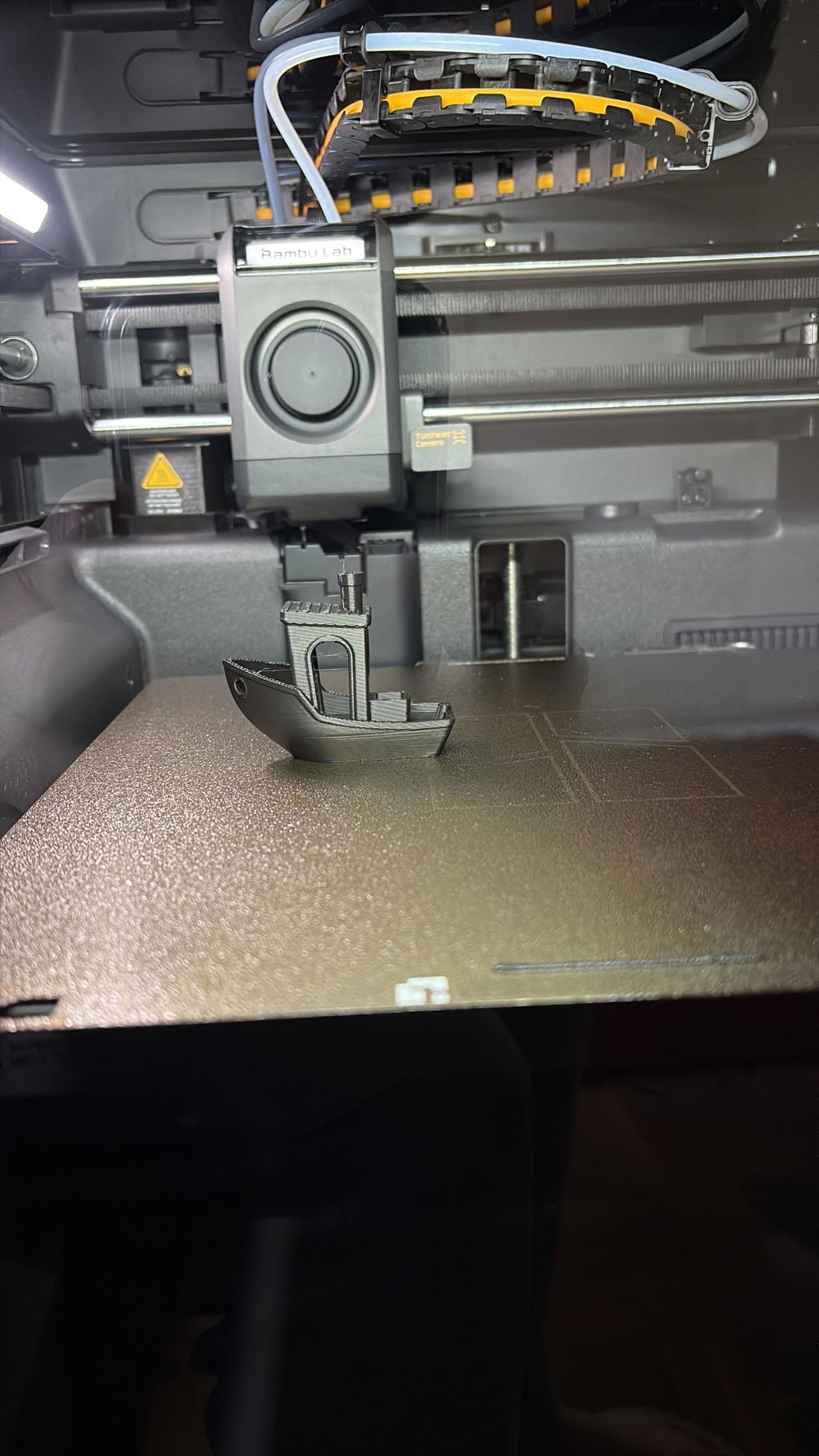
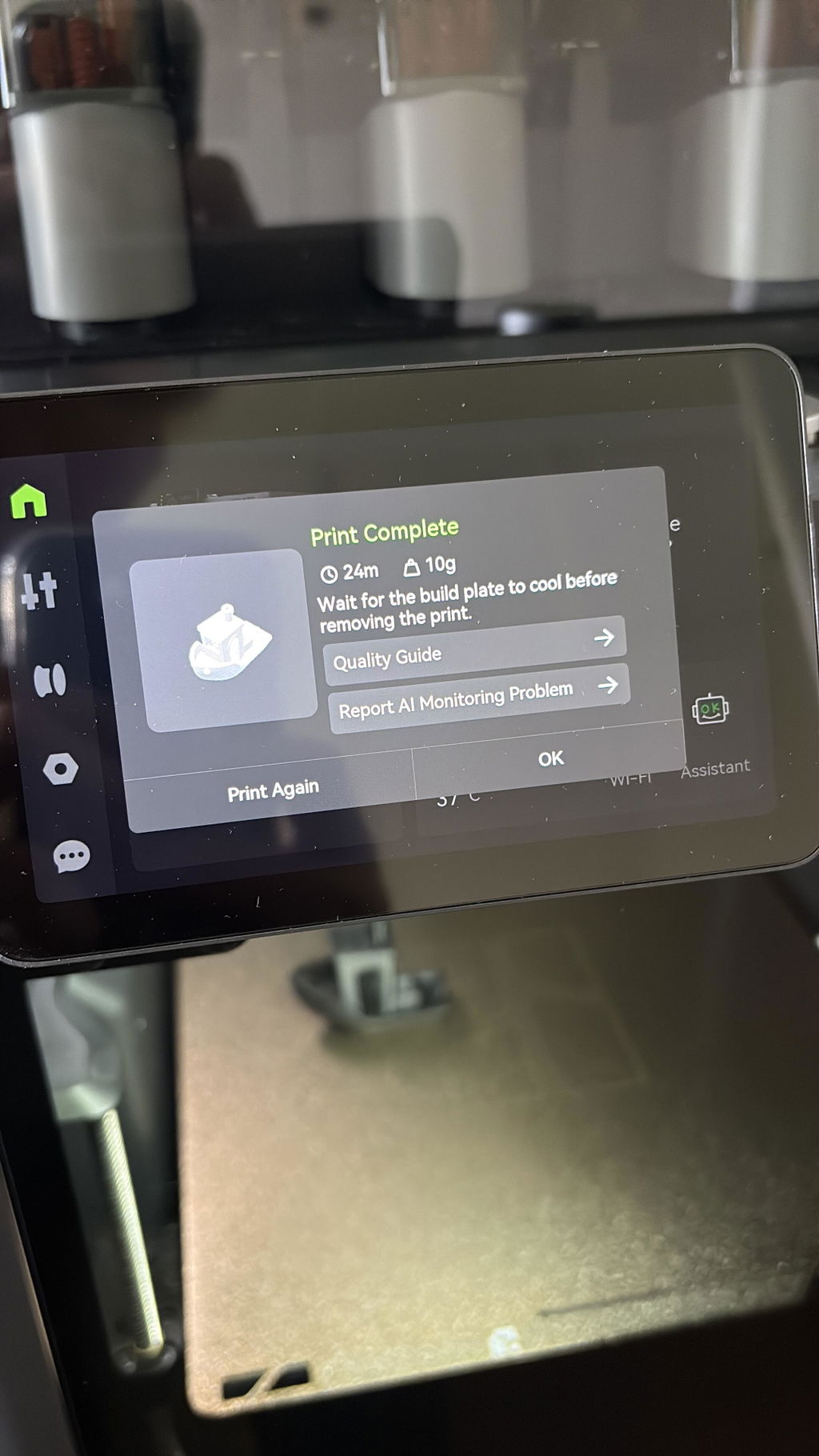
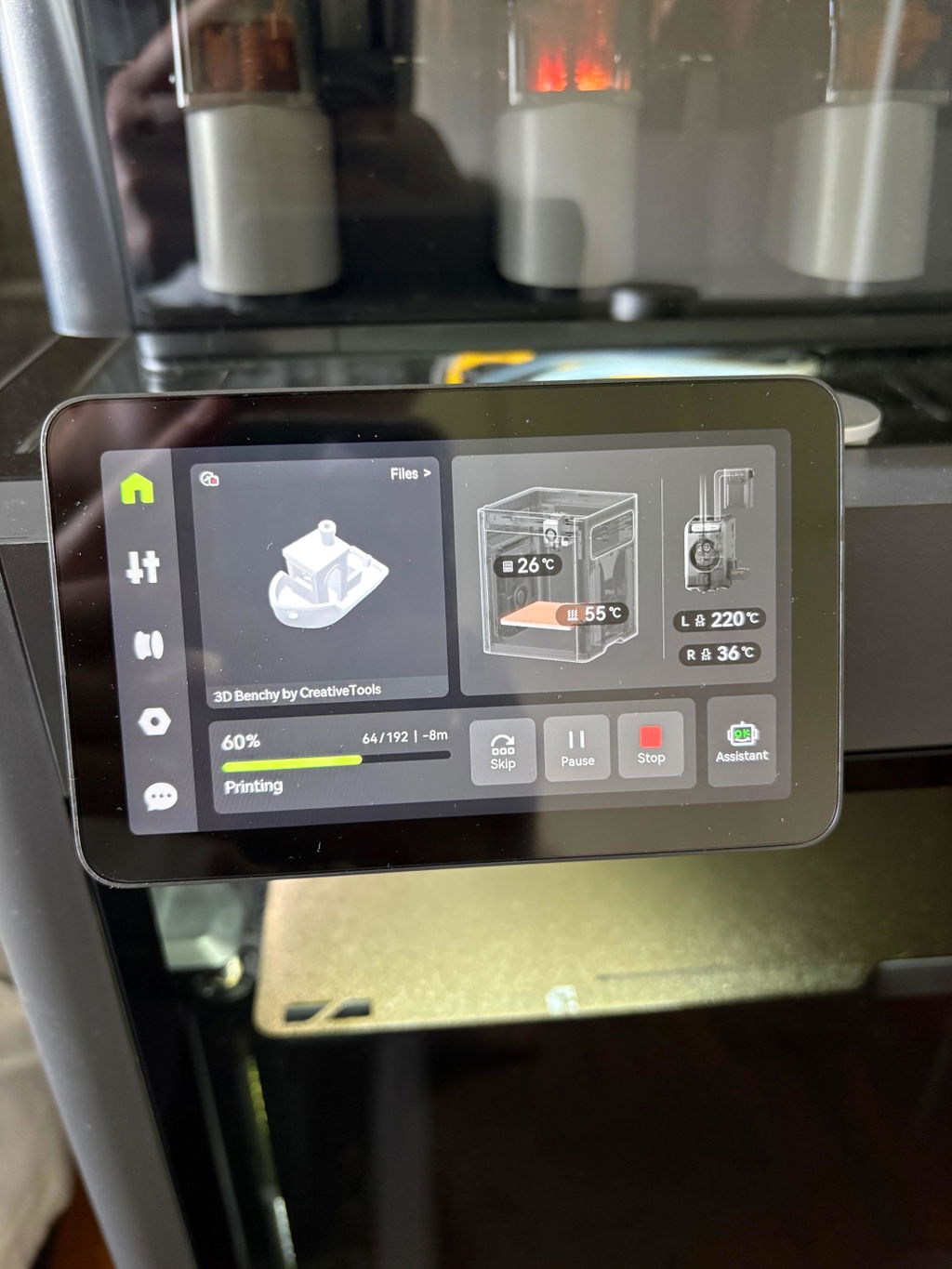
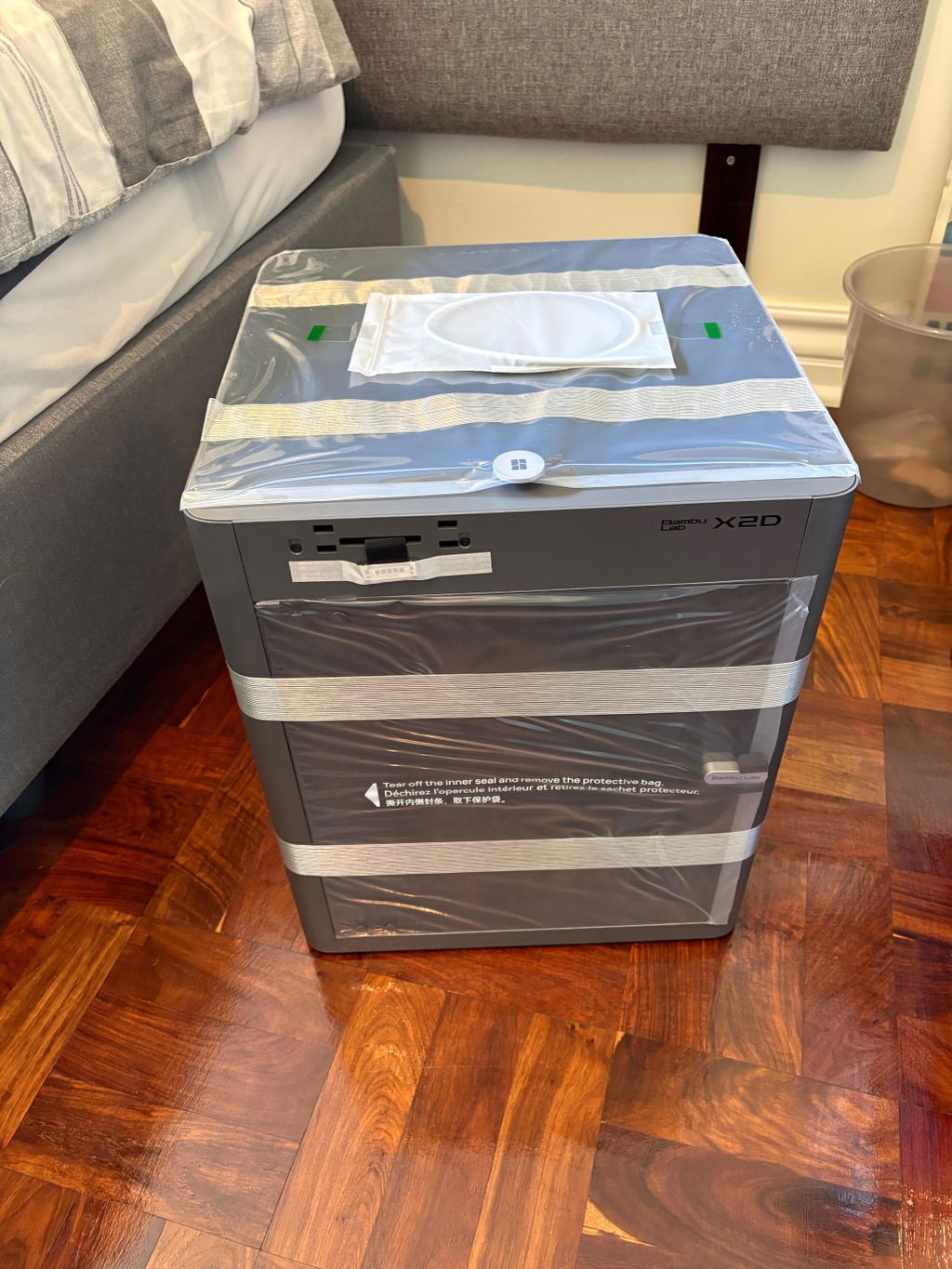
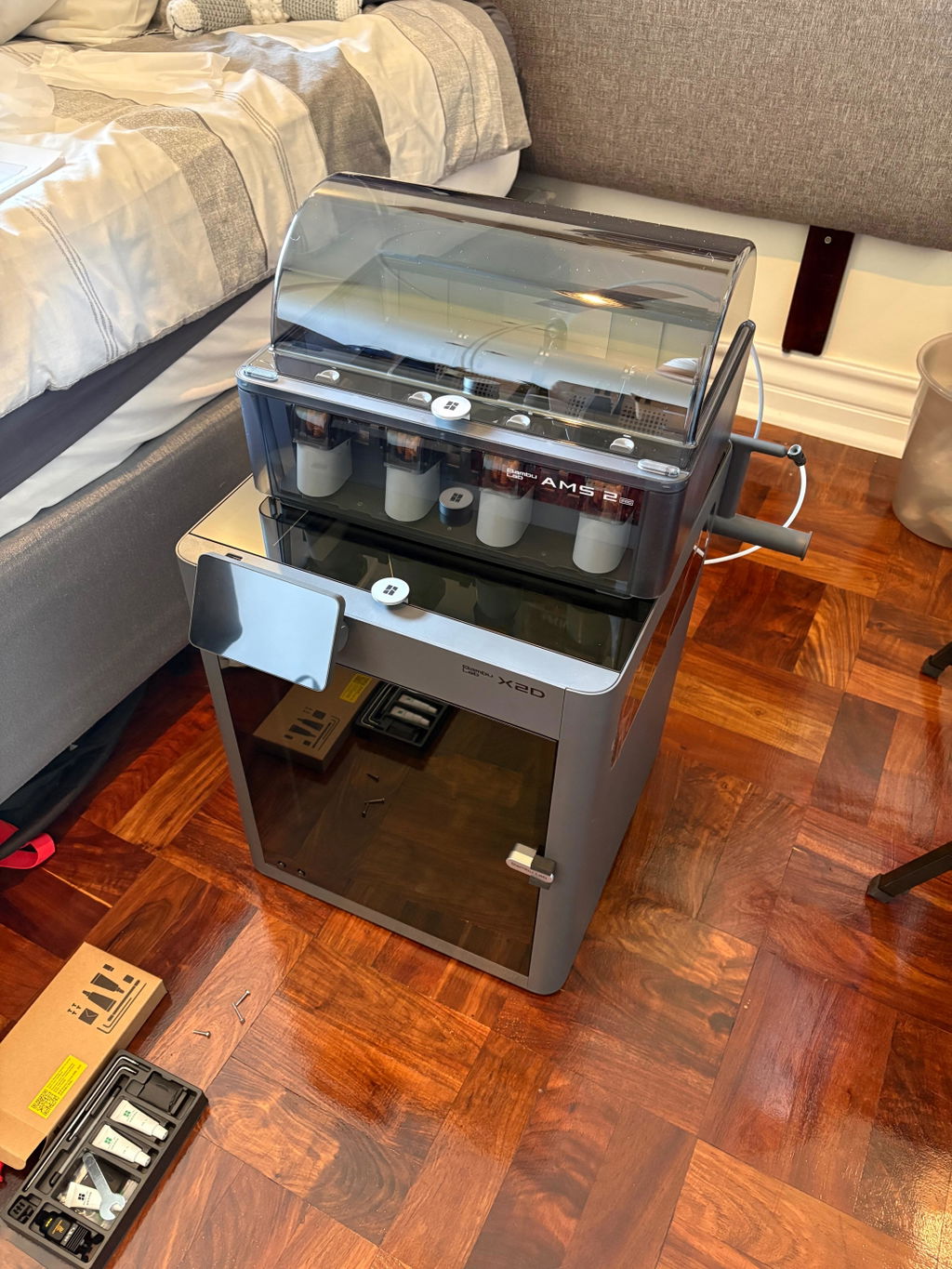
Two problems usually fight each other on a desktop printer. Supports leave marks that take a scraper and patience to fix, and multi-colour prints waste filament and time swapping spools between layers. Solve one and the other is still sitting there.
The Bambu Lab X2D Combo with AMS 2 Pro solves both from the same machine. The X2D's second nozzle handles supports in a material that releases clean, while the AMS 2 Pro feeds up to four colours or materials into the main nozzle automatically, drying and RFID-tracking each spool as it goes. You get support-free surfaces and multi-colour output from a single, unattended print run.
Dual-nozzle support removal | AMS 2 Pro, 4 spools, up to 24 colours with additional units | 65 °C automatic filament drying | RFID auto-recognition | 1000 mm/s toolhead speed | Active 65 °C chamber heating | PMSM servo extruder with jam detection | Dual-camera AI monitoring
Who the Bambu Lab X2D Combo with AMS 2 Pro is built for
The product designer producing multi-colour, multi-material parts unattended
A control panel mock-up with a black housing, a coloured indicator, and a clear lens needs three materials and a colour change that most single-nozzle printers handle through a slow, wasteful purge tower. On the X2D Combo, the AMS 2 Pro switches spools automatically at the main nozzle while the auxiliary nozzle removes any supports the geometry needs, so a multi-part assembly prints correctly coloured and support-free in one overnight run rather than three separate jobs glued together afterwards.
The hobbyist maker building detailed props and articulated figures
Cosplay armour, multi-colour miniatures, and articulated models both want colour accuracy and clean internal supports, and rarely get both without manual intervention. The AMS 2 Pro's RFID recognition auto-loads the correct print profile for each Bambu Lab spool loaded, while nozzle switching gives near-instant colour changes on PLA and PETG without long purge waste. A multi-colour helmet with internal lattice supports can run overnight and come off the plate ready to assemble, not ready for an afternoon of sanding and painting over tool marks.
The small business or print farm running varied jobs on one machine
Buying a dedicated printer for every material combination is not practical for a small operation. The AMS 2 Pro's 65 °C auto-rotating drying keeps four spools print-ready between jobs, so a queue that moves from a PETG multi-colour signage piece to a PLA-CF structural bracket does not require manually drying filament between print runs. Combined with the X2D's Dynamic Flow Calibration and jam-detecting servo extruder, the combo is built to run a varied job queue with less manual intervention per print than swapping spools and re-tuning a single-material machine.
What sets the Bambu Lab X2D Combo with AMS 2 Pro apart
Two automated systems solving two different production problems
The X2D's dual-nozzle toolhead and the AMS 2 Pro's automated spool switching solve separate problems that typically get bundled into one machine's job. Support material comes from the auxiliary nozzle so it releases cleanly against the model. Colour and material switching comes from the AMS 2 Pro at the main nozzle. Because these run independently, a print can carry four colours through the AMS 2 Pro while the auxiliary nozzle still handles supports for that same model, something a single-nozzle multi-material machine cannot do without heavy purge waste at every transition.
Filament drying that runs automatically, not as an afterthought
The AMS 2 Pro dries filament up to 65 °C with automatic spool rotation during the drying cycle, so moisture is drawn out evenly rather than from one side of the spool. A humidity sensor inside the unit reports current conditions to the touchscreen, Bambu Studio, and the Bambu Handy app, so you can see spool condition before a print starts rather than discovering brittle, bubbling PA or PETG mid-job. For Nylon, PETG, and other hygroscopic filaments, this removes a manual drying step that most multi-material setups still require.
RFID recognition that removes profile guesswork
Two RFID coils inside the AMS 2 Pro read tags embedded in Bambu Lab filament spools, automatically loading the correct print profile, tracking remaining filament, and enabling auto filament backup if a spool runs out mid-print. Loading four different Bambu Lab materials into the AMS 2 Pro means four correct profiles applied without manually selecting each one in the slicer, which matters when a job queue is switching between PLA, PETG, and engineering filaments across a working day.
A brushless servo motor built for higher-throughput feeding
The AMS 2 Pro's brushless servo motor feeds filament roughly 60% faster than earlier AMS generations, reducing the delay a colour or material change adds to a multi-part print. Airtight storage and electromagnetic air venting keep humidity out of the cabin between jobs, so a spool loaded on Monday is still in usable condition for a Thursday print without a separate drying cycle first.
Everything the standalone X2D offers, still included
The combo does not trade away any of the base X2D's mechanical capability. The dual-nozzle mechanical switching system, tested past a million cycles, active 65 °C chamber heating for ABS, ASA, and Nylon, the PMSM servo extruder sampling torque and position 20,000 times a second, and the dual-camera AI monitoring system are all present. The AMS 2 Pro adds automated multi-material capability on top of a printer that already solves support removal on its own.
Full specifications
| Specification | Value |
|---|---|
| Printing (X2D printer) | |
| Printing technology | Fused Deposition Modelling (FDM) |
| Build volume, main nozzle (W×D×H) | 256 × 256 × 260 mm³ |
| Build volume, auxiliary nozzle | 235.5 × 256 × 256 mm³ |
| Motion system | CoreXY, shared chassis platform with the Bambu Lab P2S |
| Max toolhead speed | 1000 mm/s (main nozzle) |
| Max toolhead acceleration | 20,000 mm/s² |
| Max hotend flow rate | 40 mm³/s (250 mm round model, single outer wall, Bambu ABS, 280 °C) |
| Toolhead and extruders | |
| Dual-nozzle system | Mechanical switching, gear and trigger mechanism, tested past 1,000,000 switches |
| Main nozzle extrusion | Direct drive, Bambu Lab PMSM servo motor, 20,000 samples/second |
| Auxiliary nozzle extrusion | Bowden, rear-mounted stepper motor, PTFE tube feed |
| Nozzle material | Hardened steel, both nozzles |
| Max nozzle temperature | 300 °C |
| Supported nozzle diameters | 0.2 mm, 0.4 mm, 0.6 mm, 0.8 mm |
| Filament cutter | Built-in |
| Dynamic Flow Calibration | Automatic, before every print (main printhead) |
| Chamber and build plate | |
| Active chamber heating | Supported, max 65 °C (Heat Mode); Cool Mode for external air exchange |
| Filtration | G3 pre-filter, H12 HEPA, granulated coconut shell activated carbon |
| Max heatbed temperature | 120 °C |
| Included build plate | Textured PEI Plate |
| Noise level | Below 50 dB |
| Sensors and AI | |
| Live-view camera | Built-in, 1920 × 1080 |
| Toolhead camera | Built-in, 1600 × 1200 |
| Sensor count | 31 sensors monitoring feeding path, thermal environment, and safety status |
| Power-loss recovery | Supported |
| AMS 2 Pro | |
| Filament slots per unit | 4 |
| Max expansion | Up to 4 additional AMS 2 Pro / AMS HT units, 24 filament slots total |
| Drying temperature | Up to 65 °C, with automatic spool rotation during drying |
| Humidity monitoring | Built-in sensor, readout on touchscreen, Bambu Studio, and Bambu Handy |
| RFID recognition | 2 coils, auto-loads print profile, remaining filament estimation, auto filament backup |
| Feed motor | Brushless servo, approx. 60% faster feeding than earlier AMS generations |
| Storage environment | Airtight, electromagnetic air venting for humidity control |
| Electronics, connectivity and power | |
| Touchscreen | 5-inch, 1280 × 720 |
| Native slicer | Bambu Studio (macOS, Windows, Linux) |
| Wireless | Dual-band Wi-Fi, IEEE 802.11 a/b/g/n |
| Printer dimensions (W × D × H) | 392 × 406 × 478 mm |
| Printer net weight | 16.25 kg (excluding AMS 2 Pro) |
| Input voltage | High-voltage: 200–240 VAC; Low-voltage: 100–120 VAC, 50/60 Hz |
| Max power | 1600 W @ 220 V (high-voltage version) / 1100 W @ 110 V (low-voltage version) |
How the Bambu Lab X2D Combo compares to other Bambu Lab AMS 2 Pro combos
| Feature | Bambu Lab X2D (solo) | Bambu Lab P2S Combo with AMS 2 Pro | Bambu Lab X2D Combo ★ this product | Bambu Lab H2S Combo with AMS 2 Pro |
|---|---|---|---|---|
| Build volume | 256 × 256 × 260 mm | 256 × 256 × 256 mm | 256 × 256 × 260 mm | 340 × 320 × 340 mm |
| AMS 2 Pro included | No, sold separately | Yes, 1 unit | Yes, 1 unit | Yes, 1 unit |
| Dual-nozzle support removal | Yes | No, single nozzle | Yes | No, single nozzle |
| Max toolhead speed | 1000 mm/s | 600 mm/s | 1000 mm/s | 1000 mm/s |
| Active chamber heating | Yes, 65 °C | No | Yes, 65 °C | Yes, 65 °C |
| Max colours (single AMS unit) | n/a (no AMS included) | 4 | 4 | 4 |
| Ideal user | Single-material work, clean supports only | Multi-colour work, budget-focused | Multi-colour, support-heavy production in one machine | Large-format multi-material engineering parts |
| Price (3D Printing Store) | R17,799.99 | R19,599.99 | R23,999.99 | R33,199.99 |
Materials and software
Filaments this combo handles
- PLA, hotend approx. 220 °C. Fast colour switching through the AMS 2 Pro on the main nozzle; Cool Mode keeps overhangs crisp with the door closed.
- PETG, hotend approx. 240 °C. The AMS 2 Pro's humidity sensor and 65 °C drying keep PETG spools print-ready, since PETG absorbs moisture faster than PLA.
- ABS and ASA, hotend approx. 250 °C, chamber in Heat Mode. The active 65 °C chamber prevents warping across multi-colour parts, where uneven cooling between colour sections is a common failure point.
- TPU, hotend approx. 220 °C. Best fed through the main nozzle's direct-drive extruder for precise retraction control.
- PA (Nylon), PA6-CF, PAHT, PPA, hotend approx. 260–280 °C. The AMS 2 Pro's automatic drying is particularly useful here, since Nylon that absorbs moisture between print sessions is a leading cause of bubbling and poor layer adhesion.
- PC, hotend approx. 270–280 °C, 120 °C bed. Store on a pre-dried, sealed spool for the most consistent results.
- Carbon and glass-fibre reinforced grades, print with caution: PETG-CF, ASA-CF, PA6-CF, PLA Silk. Hardened steel nozzles on both hotends support these from the factory.
- Dedicated support materials on the auxiliary nozzle, matched to release cleanly against whichever colour or material the AMS 2 Pro is feeding the main nozzle.
Slicers and software
Bambu Studio is the native slicer for macOS, Windows, and Linux, with full access to AMS 2 Pro slot assignment, RFID filament data, dual-nozzle support profiles, and Dynamic Flow Calibration. OrcaSlicer shares the same codebase and suits users who want granular control over pressure advance and transition settings, though some proprietary AMS and X2D features are not exposed. PrusaSlicer and Cura accept the combo via standard G-code with community machine profiles, workable for single-nozzle, single-colour jobs but without the AMS slot mapping or dual-nozzle support workflow.
What's in the box
- Bambu Lab X2D 3D printer, pre-assembled with dual-nozzle toolhead installed
- AMS 2 Pro unit
- 6-pin cable connecting the buffer and AMS 2 Pro
- Spool holder assembly, PTFE tube holder, and PTFE tube
- External exhaust fan with 6-pin cable connections
- Textured PEI build plate, pre-installed on the heatbed
- 5-inch touchscreen, pre-installed
- Power cable
- Tool kit: Allen keys, nozzle wiping pads, lubricant grease, scraper
- Sample filament spools
- Quick start guide and warranty documentation
Ordering, shipping and support
The Bambu Lab X2D Combo with AMS 2 Pro is supplied through 3D Printing Store's Bambu Lab range, with courier delivery across South Africa and collection available from our Centurion and Boksburg branches. Warranty claims for both the printer and the AMS 2 Pro unit are handled locally by our own service team, without international shipping. Replacement nozzles, spare AMS spool holders, and a range of compatible PLA, PETG, ABS, and ASA filament are stocked, and our team can advise on configuration before you order.
Frequently asked questions
Is the X2D Combo with AMS 2 Pro worth the difference over the standalone X2D?
If your work is single-colour, single-material printing, the standalone X2D already gives you the dual-nozzle support removal that is its main advantage over other Bambu Lab printers, at a lower price. The combo earns its premium when you regularly need multiple colours or materials in the same print. The AMS 2 Pro adds automated spool switching, drying, and RFID profile loading on top of the support removal system, rather than replacing it, so you are not choosing between clean supports and multi-colour, you get both.
How many colours can the AMS 2 Pro print in one job?
One AMS 2 Pro unit holds four spools, giving four colours or materials in a single print without manual spool changes. The system supports daisy-chaining additional AMS 2 Pro or AMS HT units, up to 24 filament slots total across a full setup, though the combo as sold here includes one AMS 2 Pro unit. Additional units can be added later as your colour requirements grow.
How long does it take to set up the X2D Combo out of the box?
Around 25 to 30 minutes, slightly longer than the standalone printer because of the AMS 2 Pro connection. The printer itself arrives largely pre-assembled. Connecting the AMS 2 Pro involves the supplied 6-pin cable, PTFE tube, and external exhaust fan, all guided by the on-screen setup sequence. There is no manual bed levelling or calibration step to complete separately.
Does the AMS 2 Pro need regular maintenance or cleaning?
Basic upkeep is periodic. Wipe down the spool chamber and buffer if dust builds up, and check the humidity readout on the touchscreen or Bambu Handy app if a spool has sat unused for a long period. The automatic 65 °C drying cycle with spool rotation handles most moisture management without manual intervention, so day-to-day maintenance is lighter than manually drying and storing filament yourself.
Does the Bambu Lab X2D Combo come with a South African plug, and is there local warranty support?
The X2D's high-voltage version runs on 200–240 VAC, matching South Africa's 220 V grid directly. Warranty claims for both the printer and the AMS 2 Pro are handled locally through 3D Printing Store's Centurion and Boksburg branches, so a covered repair does not require shipping the unit overseas. Contact our team for pre-purchase advice on voltage versions or warranty queries.