
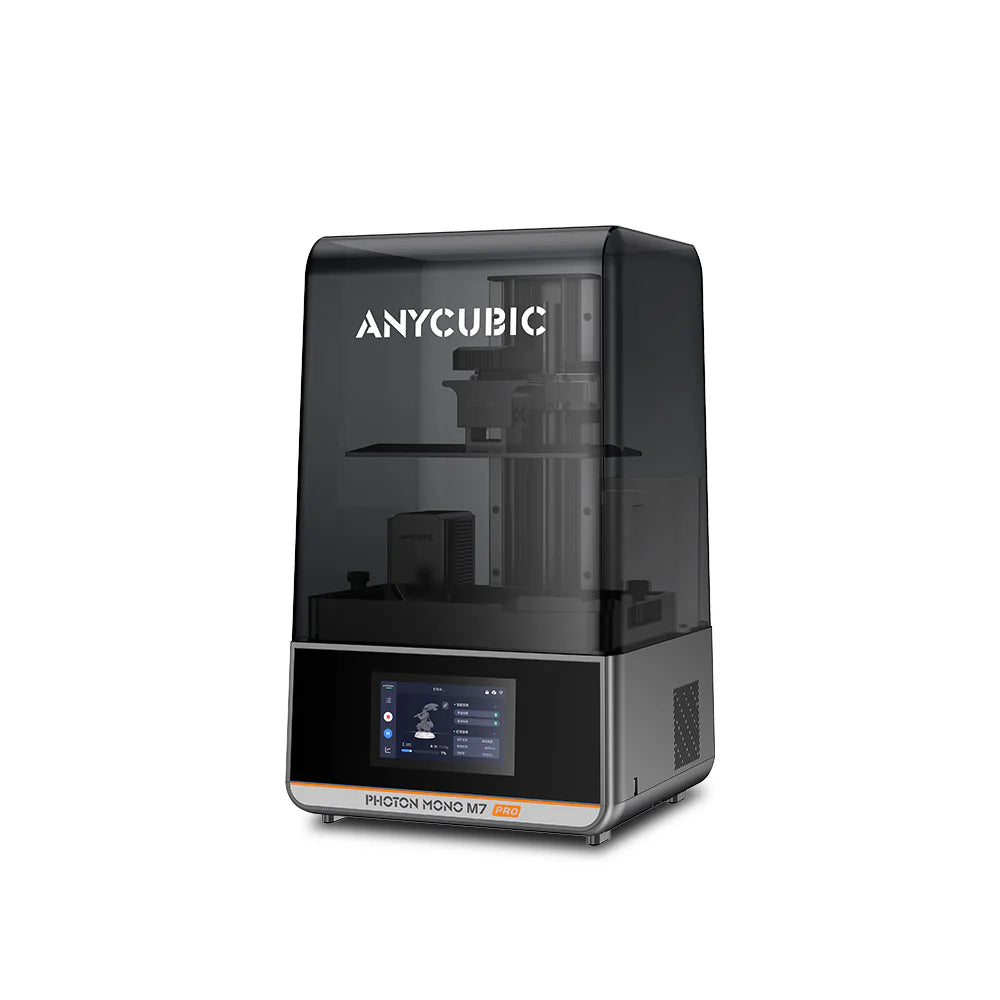
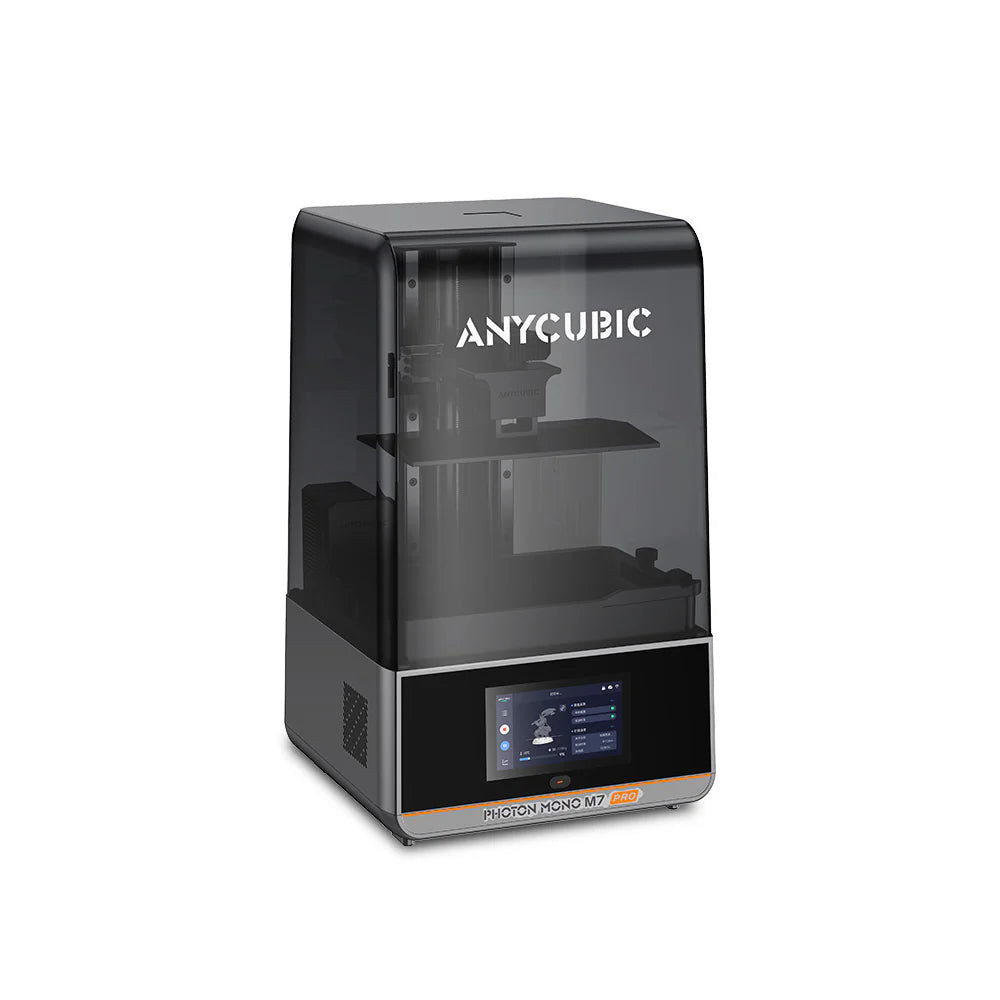
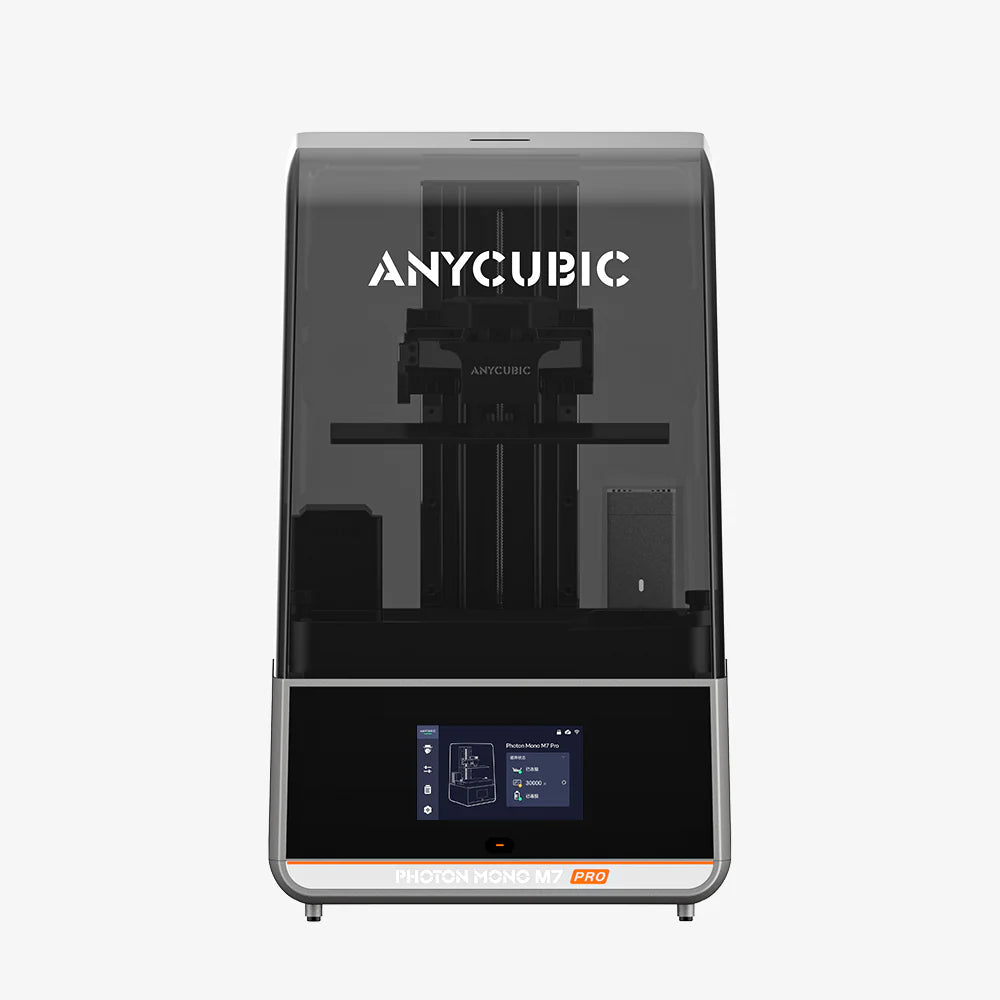
Anycubic Photon Mono M7 Pro 3D Printer


Share on social media:
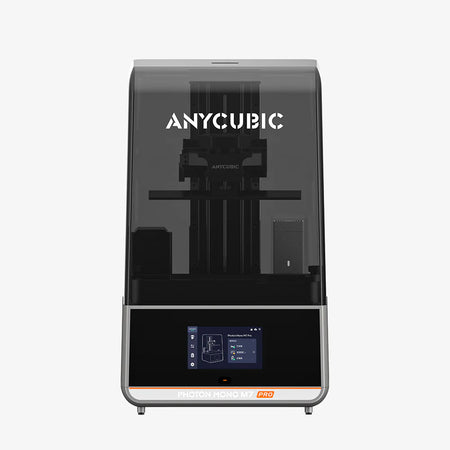
A miniature painter friend sends you a file with undercuts and 0.3mm chainmail links, and your FDM printer turns it into a blob. A jewellery client wants a wax-castable ring band with a knife-edge profile that has to survive investment casting without warping. A prototyping engineer needs a snap-fit housing accurate to a tenth of a millimetre before the tooling quote goes out. These are jobs an extrusion printer was never built for, and they are exactly what the Anycubic Photon Mono M7 Pro is built for. A 14K monochrome LCD, a COB light engine tuned for even exposure, and a resin-handling system that refills and recycles for you turn detail work that used to mean hours of babysitting into a job you set up once and collect in the morning.
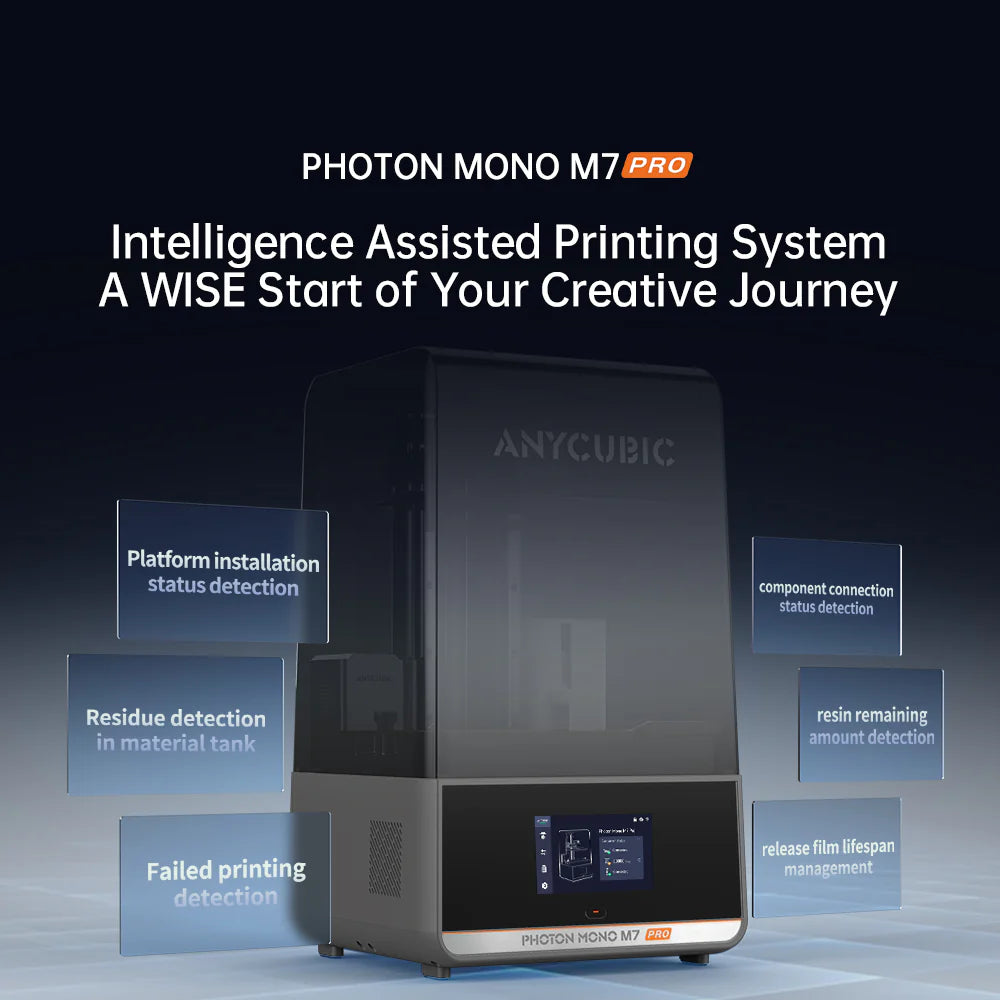
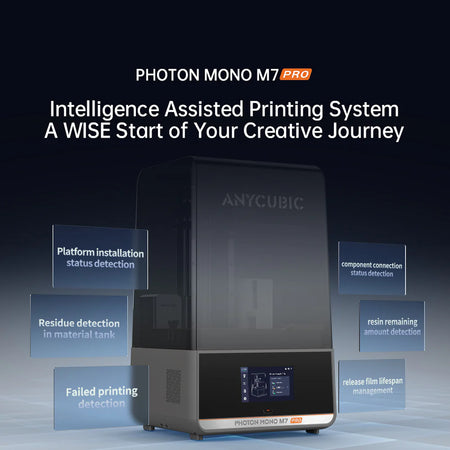
What separates this machine from the resin printers you have likely already dismissed as messy or fiddly is the automation sitting underneath the screen. Levelling is automatic. The vat heats itself to keep viscosity consistent. The printer watches its own resin level and stops itself the moment it detects a failed layer, instead of wasting a full print and a vat of resin on a fault nobody caught. The result is a machine you can hand to a junior team member on day one.
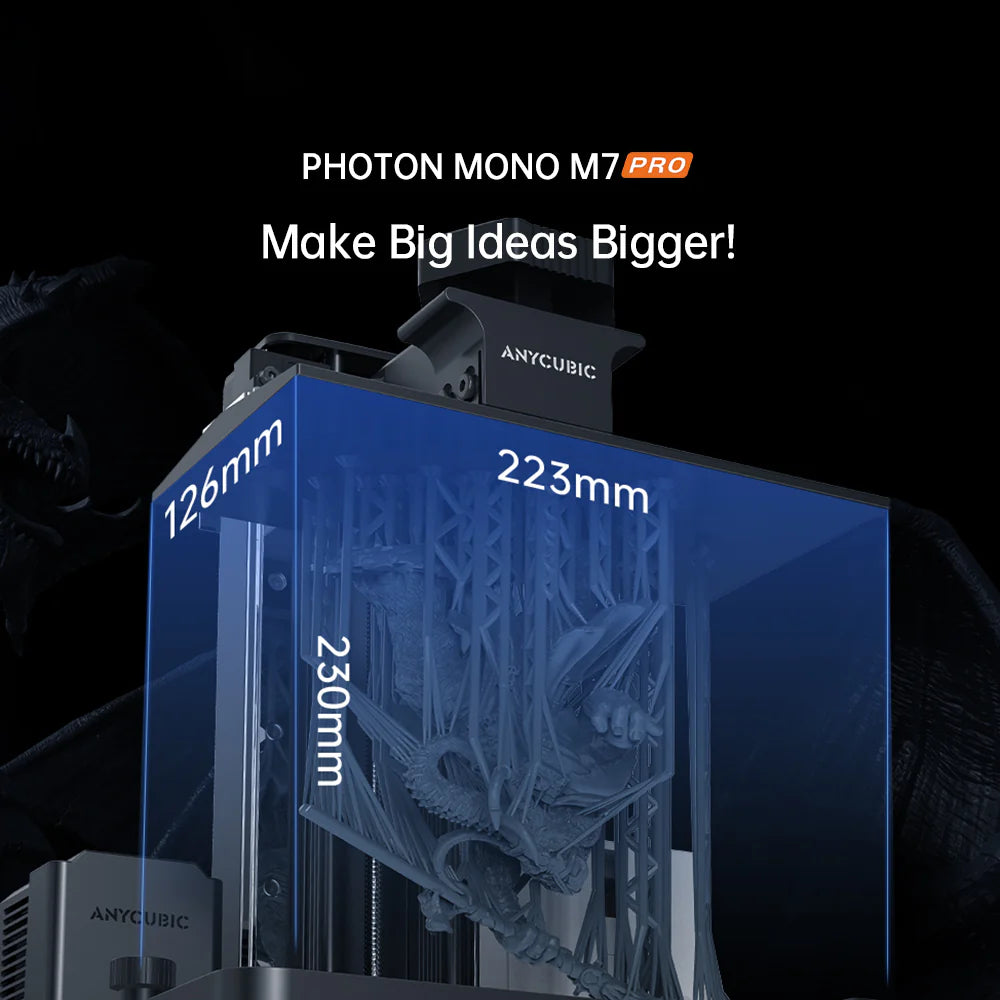
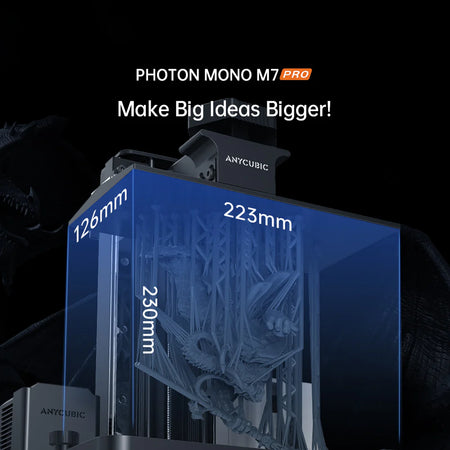
14K monochrome LCD | LighTurbo 3.0 COB light engine | 223 x 126 x 230mm build volume | Auto-fill and resin recycling | Levelling-free setup | Wi-Fi, LAN and USB | Anomaly detection with auto-stop
Who the Anycubic Photon Mono M7 Pro is built for
Miniature, tabletop and cosplay makers
If you print figures, terrain or wearable armour, resolution is what makes or breaks the piece. The M7 Pro's 14K screen and 16.8 x 24.8µm XY resolution resolve chainmail texture, facial detail and thin blade edges that a 4K or 8K screen smears into mush. Run a batch of 32mm miniatures overnight on standard resin, or split a full-scale cosplay helmet into panels across two overnight runs, and you get consistent layer adhesion across the whole build plate thanks to the light uniformity of the Fresnel lens array.
Prototyping engineers
When a part has to mate with an existing assembly, tolerance matters more than speed. The dual linear rail Z-axis holds 10µm mechanical precision, and the 0.01 to 0.15mm layer range lets you dial in fine detail for a fit-check part or push to a coarser layer height for a fast form-check. Print a functional snap-fit enclosure in ABS-like resin overnight, test it against the mating part the next morning, and iterate again before lunch.
Jewellery and dental professionals
Castable and biocompatible resins demand a machine that holds exposure consistency across the entire vat, not just the centre of the screen. With 90 percent or better light uniformity and a heated, dynamically controlled resin vat, wax-up patterns and dental models come off the plate with the crisp detail investment casting and thermoforming need. A single overnight run can carry a full tray of ring bands or aligner models ready for the next stage of the workflow.
What sets the Anycubic Photon Mono M7 Pro apart
A screen that resolves detail your slicer can already handle
The 10.1 inch monochrome LCD runs at 14K, 13,320 x 5,120 pixels, giving an XY resolution of 16.8 x 24.8µm. That is fine enough to hold sharp edges on lettering, thread detail and interlocking mechanisms without the layer lines becoming visible pixel steps. Monochrome LCD screens like this also cure faster and last longer than the older RGB panels used in budget resin printers, which matters once you are running the machine daily rather than occasionally.
Print speeds that change how you plan a job
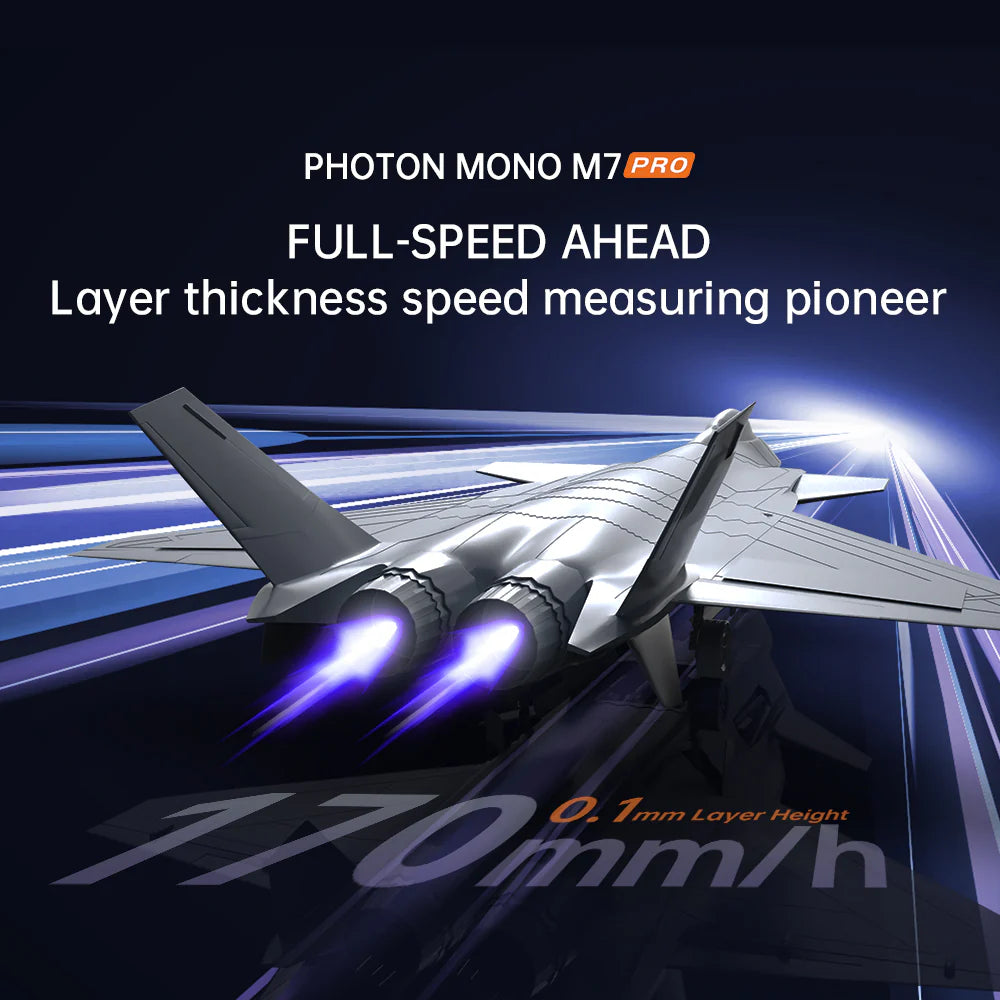
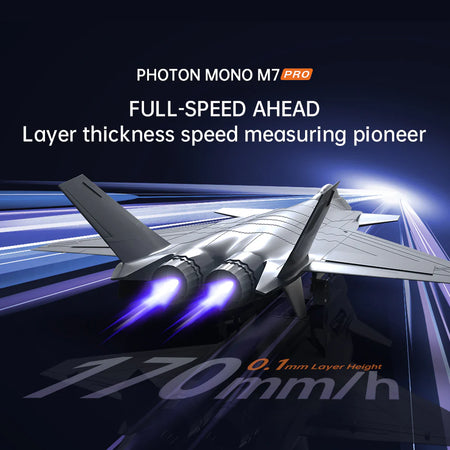
The LighTurbo 3.0 light engine, built from a COB array and a Fresnel lens, pushes light intensity to 5500 ±10% µW/cm² and reaches print speeds of up to 170mm/h with high-speed resin, or 130mm/h with standard resin at 0.1mm layers. In practical terms, a batch that would have taken all night on an older screen finishes before you have locked up the workshop, freeing the machine for a second job before morning.
Levelling that actually works the first time
You do not tram this bed. The M7 Pro uses a levelling-free system referenced against its laser-engraved build plate, so a fresh unit or a plate you have just cleaned goes straight into its first print without a manual calibration routine. Combined with the improved ACF release film, this is the part of resin printing that historically put people off, and it is the part Anycubic has spent the most engineering effort removing.
Resin handling you do not have to babysit
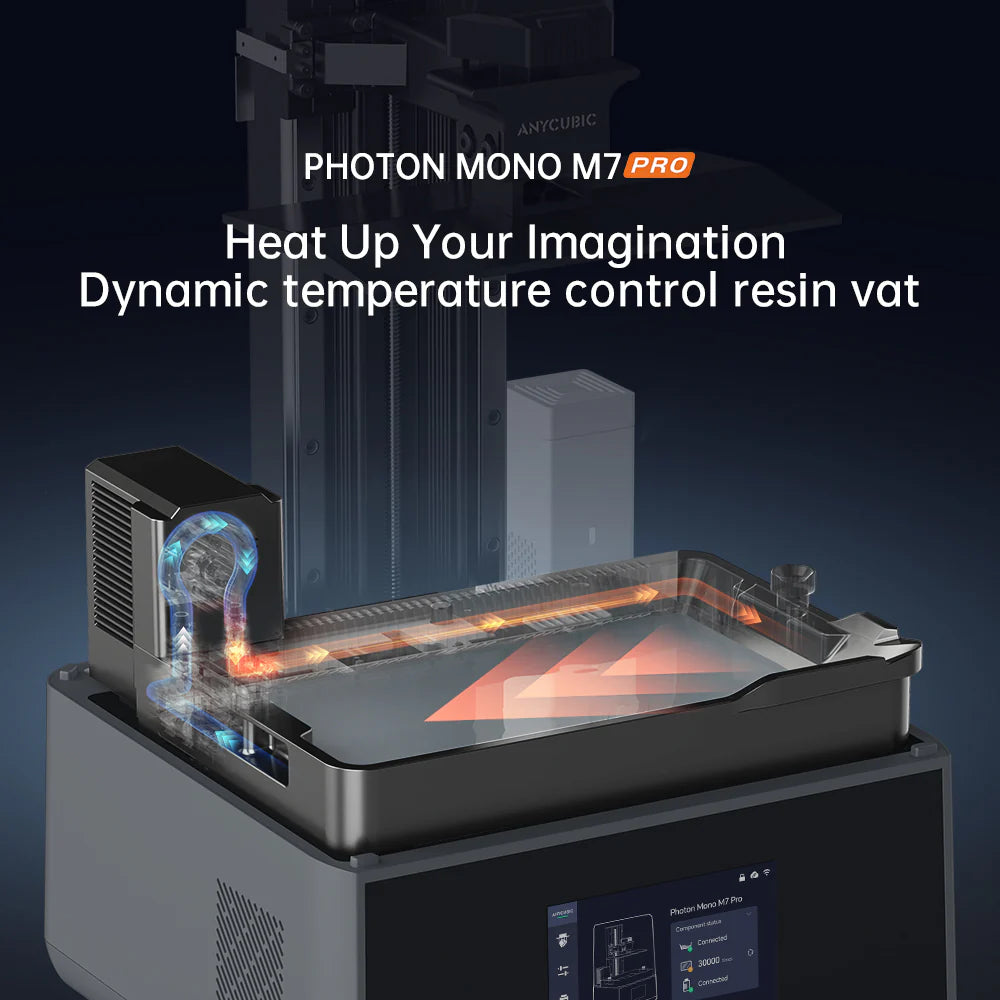
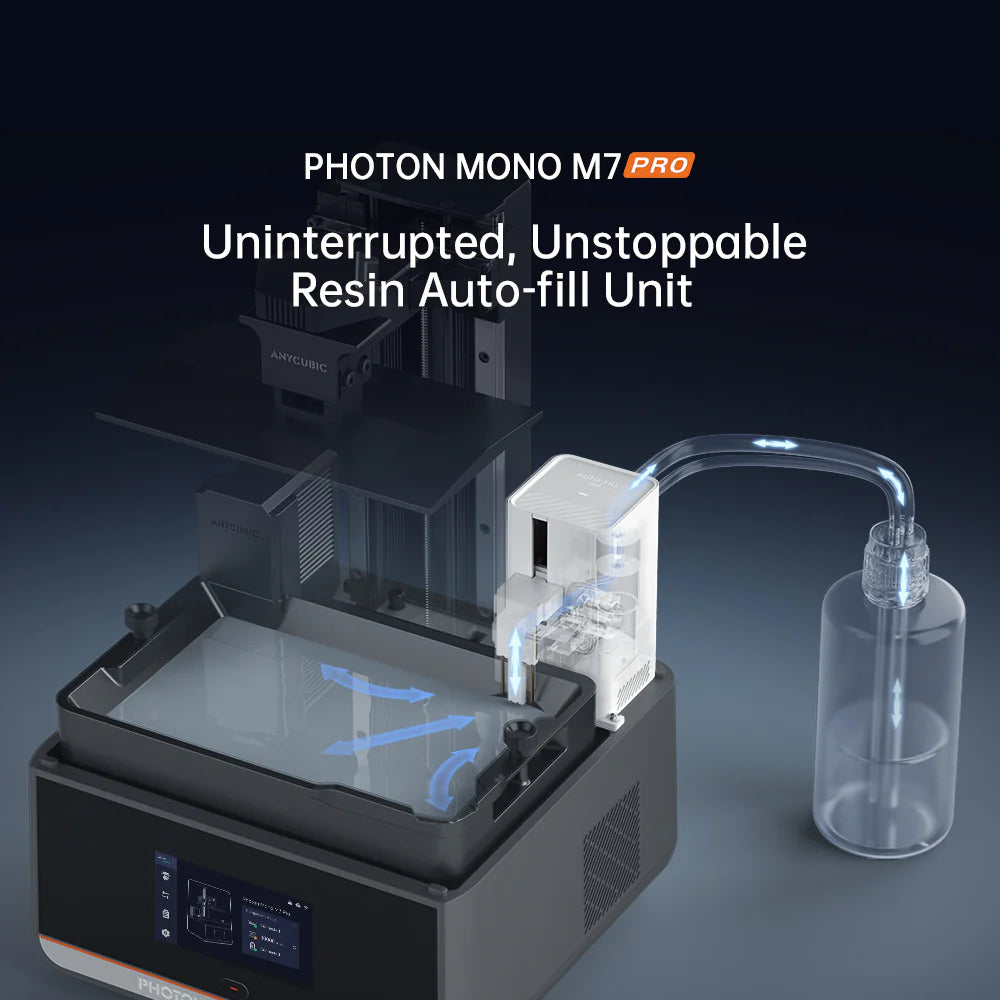
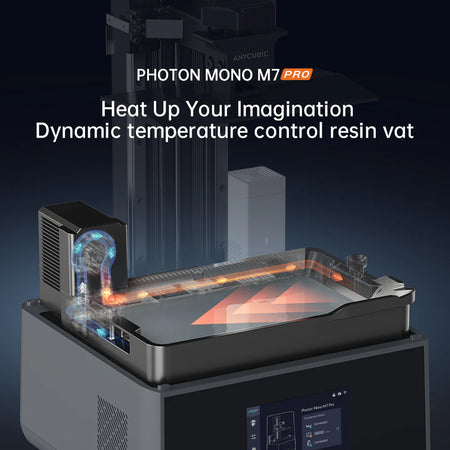
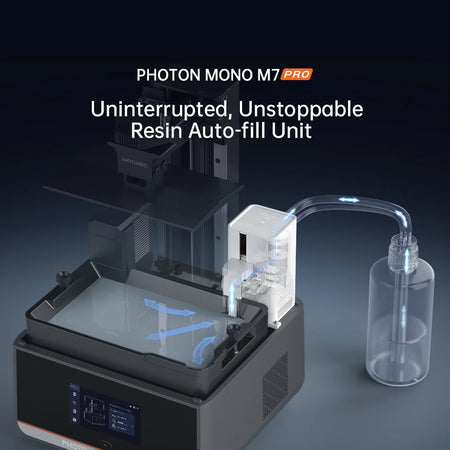
An auto-fill unit tops the vat up and recycles resin automatically, and a dynamic temperature control system keeps the vat between 20°C and 40°C so viscosity, and therefore layer adhesion, stays consistent whether your workshop is a cold Highveld morning or a humid Durban afternoon. The printer also tracks resin level and release film lifespan, and stops itself when it detects an anomaly instead of running a doomed print to completion and wasting resin.
Built around the vat photopolymerization process, not against it
The M7 Pro is an MSLA (masked stereolithography) machine, a form of stereolithography that cures a full layer of liquid photopolymer resin at once through a masked LCD panel, rather than tracing it point by point. That is why resolution scales with screen pixel density rather than laser spot size, and why a 14K screen this size is genuinely a step up in achievable detail over the 6K and 8K screens common at this price point two years ago.
Full specifications
| Specification | Value |
|---|---|
| Printing | |
| Technology | MSLA resin 3D printing (LCD-masked vat photopolymerization) |
| LCD screen | 10.1" monochrome, 14K (13,320 x 5,120px) |
| Light source | LighTurbo 3.0, COB + Fresnel lens, 5500 ±10% µW/cm² |
| XY resolution | 16.8 x 24.8µm |
| Layer height range | 0.01 to 0.15mm |
| Print speed | Up to 170mm/h (high-speed resin), 130mm/h (standard resin, 0.1mm layers) |
| Light uniformity | ≥90% across the screen |
| Hardware | |
| Z-axis | Dual linear rails, 10µm precision |
| Levelling | Automatic, levelling-free |
| Release film | Improved ACF film, replaceable, with lifespan tracking |
| Resin vat | ≤1L capacity, heated (20 to 40°C dynamic control) |
| Build plate | Laser-engraved |
| Control screen | 4.3" touchscreen |
| Resin management | Auto-fill and recycling unit, resin level detection, failed print anomaly detection |
| Software | |
| Slicer compatibility | Anycubic Photon Workshop, Chitubox, Lychee Slicer |
| App support | Anycubic App, multilingual interface |
| Connectivity | |
| Interfaces | USB, Wi-Fi, LAN |
| Physical | |
| Build volume | 223 x 126 x 230mm (6.5L) |
| Machine dimensions | 312 x 315 x 520mm |
| Machine weight | 12.8kg |
| Package weight | 15.2kg |
| Power | |
| Rated power | 240W |
| Power-loss resume | Not supported |
How the Anycubic Photon Mono M7 Pro compares to the rest of the Photon Mono range
| Spec | Photon Mono M7 Pro, this product | Photon P1 | Photon Mono M7 Max | Photon Mono M5s Pro |
|---|---|---|---|---|
| LCD resolution | 14K, 10.1" | 14K, 10.1" | 7K, 13.6" | 14K, 10.1" |
| Build volume | 223 x 126 x 230mm | 223 x 126 x 230mm | 298 x 164 x 300mm | 200 x 126 x 224mm |
| Top speed | 170mm/h | Not published | 86mm/h | 105mm/h |
| Auto-levelling | Yes, levelling-free | Yes, Auto-Levelling 3.0 | Yes, levelling-free | Yes |
| Resin handling | Heated vat, auto-fill and recycling | Heated vat, up to 8000cps viscosity, dual-vat option | Auto-fill and recycling | Standard vat |
| Smart features | Anomaly detection, resin level tracking | AI resin monitoring, residue detection | Anomaly detection, resin level tracking | Basic monitoring |
| Rated power | 240W | Not published | 180W | 110W |
| Connectivity | Wi-Fi, LAN, USB | Wi-Fi, LAN, USB | Wi-Fi, LAN, USB | Wi-Fi, LAN, USB |
| Ideal user | All-round detail work, jewellery, minis | High-viscosity and dual-material work | Larger batches, bigger props | Budget-conscious detail printing |
| Price tier | Mid-range | Mid to upper | Upper, import only | Entry, limited stock |
| In stock at 3D Printing Store | Yes | Yes | No | No |
If your work leans toward higher-viscosity engineering and dual-material resins, the Photon P1 is the closer match. If you need a bigger bed for batch runs or larger props and can source it as an import, the M7 Max steps up in volume at the cost of resolution. For most makers, engineers and casting professionals, the M7 Pro's balance of 14K detail, speed and resin automation is the better fit.
Materials and software
Resins this printer handles
- Standard resin, cures fastest under the LighTurbo light engine and is the best starting point for general miniatures and prototypes; keep exposure times at the manufacturer's default and adjust in small increments.
- High-speed resin, formulated to take advantage of the printer's 170mm/h ceiling; use it for large batches where turnaround matters more than ultra-fine surface finish.
- Water-washable resin, cuts down on isopropyl alcohol use in your post-processing; rinse thoroughly before curing since residual water left on the surface can leave a slightly matte finish.
- ABS-like and tough resin, the right choice for functional prototypes and snap-fits; post-cure a little longer than standard resin to reach full mechanical strength.
- Plant-based resin, a lower-odour option worth using in a shared workshop or home space; ventilation still matters even though the smell is milder.
Slicers and software
The M7 Pro works natively with Anycubic Photon Workshop, which auto-detects the printer profile and is the fastest path from model to plate. Chitubox is fully supported and remains the better choice if you already have support structures and hollowing workflows built around it. Lychee Slicer support is scheduled, useful if your workflow already standardises on Lychee for its automatic support generation. Whichever slicer you use, files export as sliced layer images rather than a G-code toolpath, which is the fundamental difference between resin's vat photopolymerization process and FDM's material extrusion.
What's in the box
- Anycubic Photon Mono M7 Pro printer unit
- Build platform
- Resin vat
- Auto-fill unit
- Wi-Fi antenna
- Hex key set
- Protective equipment (gloves and mask)
- 5 filters
- 2 scrapers
- Levelling paper
- USB drive
- Screen protector kit
- Power cord and user manual
Ordering, shipping and support
The Anycubic Photon Mono M7 Pro ships nationwide from stock via Courier Guy, Fastway, Globe Flight or Aramex, with orders over R1,500 qualifying for free delivery. It runs on standard South African 220 to 240V mains power, so there is no step-down converter to buy. Warranty claims are handled locally through 3D Printing Store's in-house technicians in Centurion and Boksburg rather than being shipped back to the manufacturer, and replacement resin, release film and vats are stocked in the same Anycubic range for when consumables need replacing.
Frequently asked questions
Is the Photon Mono M7 Pro better than the Photon P1?
For most buyers, yes, the M7 Pro is the more versatile choice. Both share the same 14K screen and build volume, but the P1 is built around higher-viscosity engineering resins and an optional dual-vat setup. Unless you specifically need those, the M7 Pro's lower price and simpler single-vat workflow make it the easier recommendation.
Can the Photon Mono M7 Pro print ABS-like or flexible resin?
Yes. It handles standard, high-speed, water-washable, ABS-like and plant-based resins without any hardware changes. Flexible or TPU-style resins work too, though slower exposure and gentler supports are worth testing on a small piece first since flexible formulations vary more between brands than standard resin does.
How long does it take to set up the Photon Mono M7 Pro out of the box?
Most buyers are printing within 30 to 45 minutes. The levelling-free build plate removes the fiddliest step in resin printer setup, so unboxing time is mostly filling the vat, loading a test file over USB or Wi-Fi, and letting the auto-fill unit prime the resin line for its first layer.
How often does the release film need replacing?
The printer tracks film usage and will prompt you before it degrades, but as a rule of thumb, plan on replacing the ACF film every 100 to 150 print hours, sooner if you notice cloudiness or the print starts failing to release cleanly from the vat.
Does the Photon Mono M7 Pro work with South African power and is there local warranty support?
Yes to both. The printer's 240W power supply accepts South Africa's standard 220 to 240V mains directly, and the unit ships with a compatible plug. Warranty and servicing are handled locally by 3D Printing Store's technicians in Centurion and Boksburg, so you are not left waiting on an overseas RMA process.